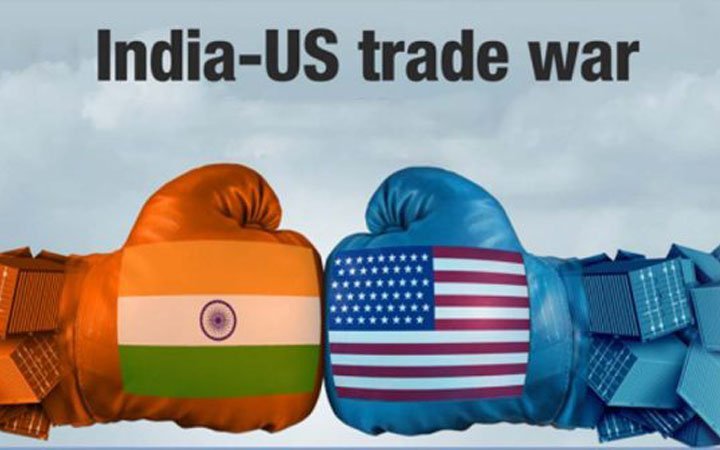
Recent reports from multiple news outlets confirm that the US has imposed a 50% tariff on a wide range of goods from India, which has led to major US retailers like Amazon, Walmart, and Target halting new orders. The tariffs were reportedly implemented as a consequence of India’s continued purchase of crude oil from Russia.
Tariffs and Trade Impact
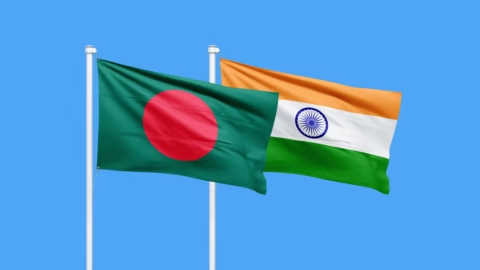
- Tariff Rate: The US has imposed a 50% tariff on certain Indian goods. This is composed of an initial 25% tariff followed by an additional 25% “punitive” tariff. The total tariff is significantly higher than those imposed on competitors like Bangladesh (20%) and Vietnam (20%).
- Retailers’ Response: Major US retailers, including Amazon, Walmart, and Target, have reportedly suspended new orders from Indian suppliers, especially for ready-made garments. Industry sources indicate that these US buyers are unwilling to absorb the increased costs and are pushing for Indian exporters to do so.
- Hardest Hit Sectors: The textile and apparel industry is among the most affected, with a potential loss of up to $5 billion in exports over the next year. Firms in key manufacturing hubs like Tirupur, Noida, and Surat are seeing a huge impact, and some have reportedly decided to halt production for US orders. Other sectors, including gems and jewelry, leather, and shrimp, are also expected to be severely impacted.
- India’s Competitiveness: The new tariffs have significantly eroded India’s competitive advantage compared to other textile exporters in the region, such as Vietnam, Indonesia, Cambodia, and Bangladesh, which face lower tariff rates.
Wider Global Context
- Brazil’s Situation: Brazil has also been subjected to a 50% tariff by the US on certain products. The Brazilian government has initiated formal consultations with the World Trade Organization (WTO) and its president, Luiz Inácio Lula da Silva, has reportedly reached out to other world leaders, including Indian Prime Minister Narendra Modi and Chinese President Xi Jinping.
- Average US Tariffs: A recent report from the WTO and the International Monetary Fund (IMF) states that the average US tariff rate has climbed to 20.1%, which is the highest sustained level since the 1910s.This figure includes the new tariffs imposed on India and other trading partners. The report warns that this reverses decades of trade liberalization and could have significant negative effects on global trade.
- BRICS Cooperation: The BRICS nations, which include India and Brazil, have been increasingly focused on strengthening internal trade and economic cooperation. In recent months, they have been working on various trade and economic agreements, including the BRICS Declaration on WTO Reform and the strengthening of the multilateral trading system. This appears to be a response to the growing trend of protectionist measures.
This situation could lead to a number of potential consequences, including a full-blown trade war, increased inflationary pressures in the US, and a shift in Indian export focus towards other markets like Australia and countries in Africa.