In a significant display of its defense capabilities and a concentrated push for urban development, India has recently made headlines with two major announcements: the successful test-firing of the Agni-5 ballistic missile and the inauguration of key highway projects in Delhi.
Agni-5 Test Validates India’s Strategic Deterrence
India successfully test-fired the Agni-5 intermediate-range ballistic missile from the Integrated Test Range at Chandipur, Odisha. This was a routine user trial conducted under the Strategic Forces Command and validated all operational and technical parameters of the missile.
The Agni-5 is a three-stage, solid-fueled missile with a range of over 5,000 kilometers, placing almost the entire Asian continent, including the northernmost parts of China, and some regions of Europe within its strike range. It is a critical component of India’s “credible minimum deterrence” posture and its “No First Use” nuclear doctrine, providing a robust second-strike capability.
Developed by the Defense Research and Development Organization (DRDO), the missile features advanced technologies, including a ring-laser gyro-based inertial navigation system for high precision and a canisterized launch system. The canister launch provides the Strategic Forces Command with the flexibility to store the missile for long periods, transport it quickly via road or rail, and fire it from a location of choice. This latest test follows a previous launch in March 2024, which demonstrated the missile’s Multiple Independently Targetable Re-entry Vehicle (MIRV) technology, allowing a single missile to deliver multiple warheads to different targets.
New Highway Projects to Decongest Delhi
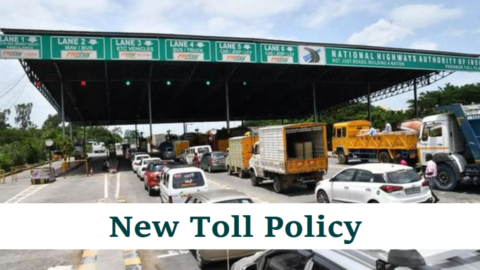
In a major move to tackle Delhi’s persistent traffic congestion, two significant highway projects—the Delhi section of the Dwarka Expressway and the Urban Extension Road-II (UER-II)—were inaugurated. The projects, with a combined cost of nearly Rs 11,000 crore, are part of the government’s broader Rs 50,000 crore plan to modernize the capital’s road network.
- Dwarka Expressway: The 10.1-km Delhi section of the expressway, built at a cost of approximately Rs 5,360 crore, provides a crucial link and multimodal connectivity. It connects with the Delhi Metro’s Blue and Orange lines, the upcoming Bijwasan railway station, and the Yashobhoomi convention centre. This section complements the 19-km Haryana portion of the expressway, which was inaugurated in March 2024.
- Urban Extension Road-II (UER-II): The Alipur to Dichaon Kalan stretch of UER-II, along with new links to Bahadurgarh and Sonipat, was developed at a cost of around Rs 5,580 crore. This corridor is expected to significantly ease pressure on Delhi’s Inner and Outer Ring Roads and highly congested junctions like Mukarba Chowk and Dhaula Kuan.
The new highways are projected to drastically reduce travel time, with officials noting that the commute from the Singhu border to the Indira Gandhi International (IGI) Airport could be cut from two hours to just 40 minutes. Beyond easing traffic, the projects are also expected to help reduce vehicular pollution and support the smoother movement of goods across the National Capital Region (NCR).