Key Points:
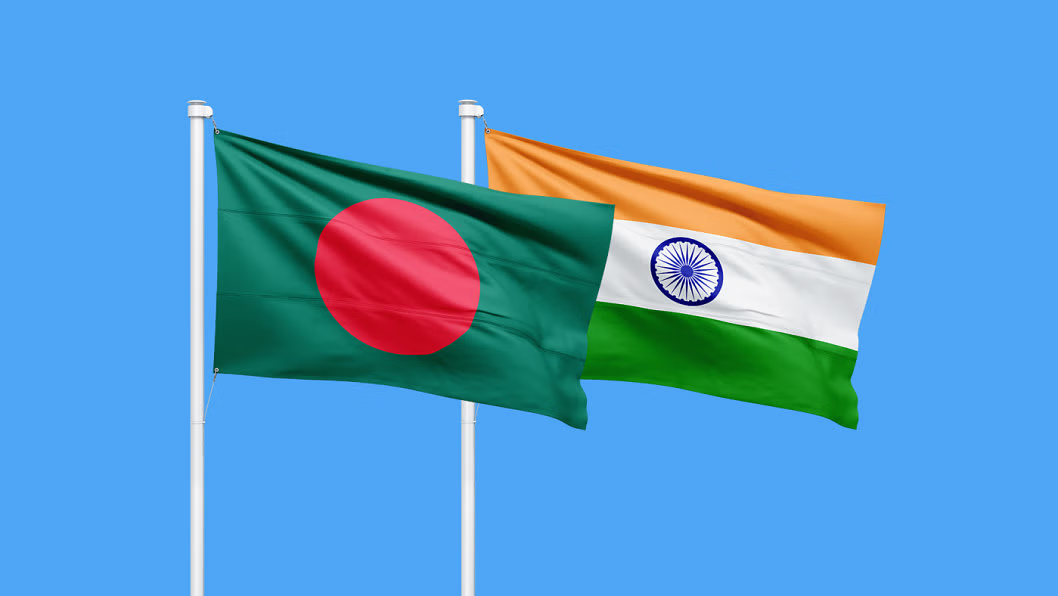
- What was the facility? Since June 2020, India had allowed Bangladesh to transship its export cargo through Indian Land Customs Stations (LCSs) to Indian ports and airports for onward shipment to third countries. This facilitated smoother and potentially cheaper trade routes for Bangladesh.
- Why was it revoked? India’s Ministry of External Affairs (MEA) stated that the facility had led to significant congestion at Indian airports and ports, causing logistical delays and higher costs that hindered India’s own exports and created backlogs.
- Impact on Bangladesh: The revocation is expected to disrupt Bangladesh’s export logistics, potentially increasing costs and transit times for its goods destined for third countries in Europe, West Asia, and other regions. The apparel sector, which constitutes a significant portion of Bangladesh’s exports, is likely to be particularly affected.
- Exemptions: The MEA clarified that this measure does not impact Bangladesh’s exports to Nepal and Bhutan that transit through Indian territory. These movements will likely continue under the terms of the World Trade Organization’s (WTO) Trade Facilitation Agreement (TFA), which mandates the facilitation of trade for landlocked developing countries.
- Industry Reactions:
- Indian Exporters: The Apparel Export Promotion Council (AEPC) in India had been demanding the discontinuation of this facility for some time, citing that the transshipment of Bangladeshi cargo through Indian ports, especially the Delhi air cargo complex, was causing congestion and increasing freight rates for Indian exporters. They have welcomed the decision.
- Bangladeshi Experts: Some experts in Bangladesh have termed the decision “unfortunate and unnecessary” and expressed concerns about potential strain on bilateral trade relations and the increased logistical burden on their exporters.
- Possible Underlying Reasons: While port congestion is the official reason, some reports suggest that the revocation might also be linked to recent controversial remarks made by Bangladesh’s Chief Advisor Muhammad Yunus during a visit to China. He reportedly described India’s northeastern states as “landlocked” and suggested that Bangladesh was the “only guardian of the ocean” for the region, inviting China to extend its economic influence there. These remarks were met with strong criticism in India. Additionally, there are reports of Bangladesh considering a strategic base near India’s Siliguri Corridor with Chinese investment, which may have also contributed to India’s decision.
- WTO Implications: Some trade analysts have pointed out that under WTO rules, particularly Article V of GATT 1994, member countries are required to allow freedom of transit for goods to and from landlocked countries. The sudden revocation of this facility for Bangladesh’s third-country exports raises questions about India’s obligations in this regard, although exemptions for Nepal and Bhutan have been made.
In summary, India has revoked the transshipment facility for Bangladesh’s exports to countries other than Nepal and Bhutan, citing congestion at its ports and airports. This decision is likely to impact Bangladesh’s trade flows and has sparked discussions about the underlying reasons and implications for bilateral relations and WTO obligations.