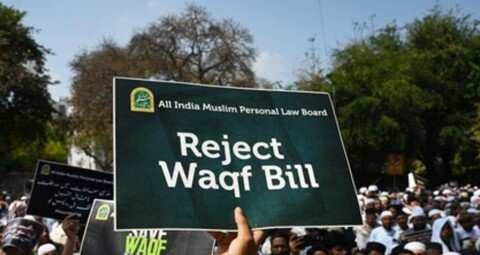
The Congress declared that the government was trying to “defame (and) disenfranchise minorities” and staging an “4D assault on the Constitution”.
AIMIM chief Asaduddin Owaisi, in a symbolic protest, said he was “tearing up the law like Mahatma Gandhi did” with British law in South Africa.
The government contended that the bill was about property and its management, not religion. Huge lands and properties have been taken over by Waqf — aided by the Congress’s appeasement politics. There were largescale irregularities that did not allow Waqf property to benefit women and children, which the amended law would do. Also, the Waqf bill, the BJP said, was developed after consulting a large section of people and it has received the support of non-Muslim minorities.
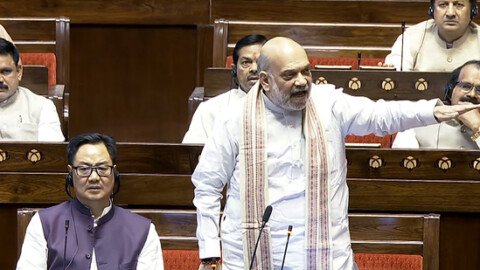
Speaking in favour of the bill, Union minister Amit Shah presented a long list of properties that he said were given for Waqf. The list included land belonging to temples, other religions, the government and others.
“Properties in (Delhi’s) Lutyens zone went to Waqf, and they started taking over government land… In Tamil Nadu, a 400-year-old temple property was declared as Waqf’s. Land for a five-star establishment was given to Waqf for 12,000 a month… Several properties belonging to different religions were declared as Waqf property, including Chandra Shekhar Azad Park in Prayagraj,” he said.
“You cannot donate someone else’s property. You donate something which is yours,” he said.
While introducing the bill, Union minister Kiren Rijiju cited a case going on since 1970 in Delhi involved several properties, including the old Parliament building.
“If we had not introduced this amendment today, even the building we are sitting in could have been claimed as Waqf property,” he said.
Pointing fingers at the Congress, Mr Shah said if there had not been an amendment in the Wakf Act in 2013, there would have been no need to bring this legislation.
“In 2013, the extreme Wakf law was made overnight for the purpose of appeasement. As a result, 123 properties in Delhi’s Lutyens zone were handed over to the Wakf just 25 days before the elections,” he said.
He also denied that non-Muslims will be included in the Wakf board, saying “Those who take care of religious property, in that board, non-Muslims won’t be in that. We don’t want to even interfere there. The Opposition is trying to scare the minority and build their vote banks”.
Provisions Of Amended Bill
According to the Waqf Amendment Bill, trusts created by Muslims under any law will no longer be considered Waqf. Only practicing Muslims (for at least five years) can dedicate their property to Waqf, it says, restoring pre-2013 rules. Also, women must receive their inheritance before Waqf declaration, with special provisions for widows, divorced women and orphans.
The bill also proposes that an officer above the rank of collector will investigate government properties claimed as Waqf.
In case of disputes, the senior government official will have the final say on whether a property belongs to Waqf or the government. This replaces the existing system where such decisions are made by Waqf tribunals.
Also, the bill proposes that non-Muslim members will be included in the central and state Waqf boards for inclusivity.
Women must receive their inheritance before Waqf declaration, with special provisions for widows, divorced women and orphans.
The All India Muslim Personal Law Board has said it will challenge the Waqf (Amendment) Bill in court. “We will organise programmes across the country just like farmers did. If needed, we will block roads and take all peaceful measures to oppose the bill,” said the law board spokesperson Mohammad Mohsin.